
Last updated
How many restrooms does a race actually need?
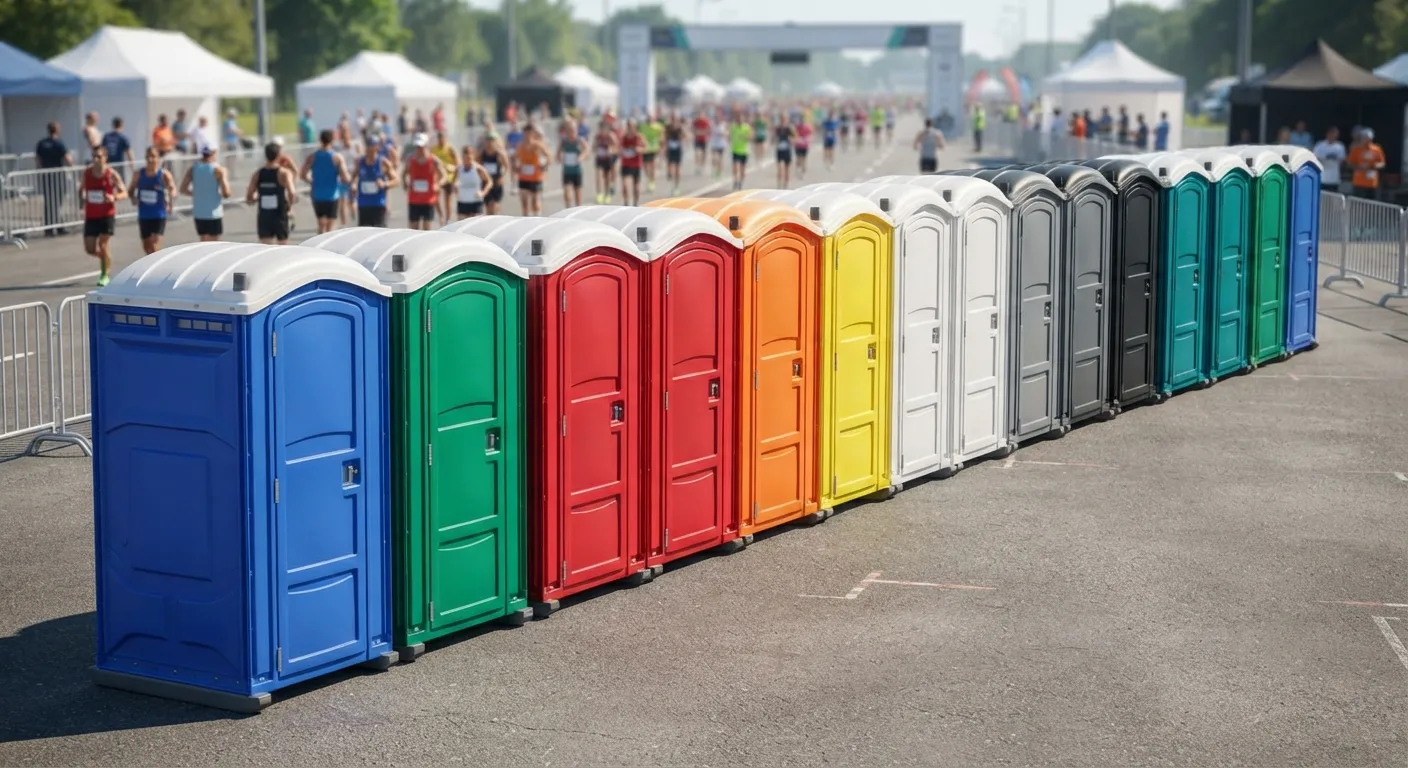
Start with the field size, then split units between the start corral, the finish line and any mid-course aid stations. OSHA 1926.51(c) sets construction ratios, not race-day ones, but race directors use it as a floor: 1 toilet per 20 people is a reasonable starting math for a static crowd, and race crowds move, so you lean heavier at start and finish where lines form. A 5K with 500 registered runners plus spectators often needs standard units at three points minimum: staging, mile markers if the course loops back near itself, and the finish chute. Add one ADA accessible unit per cluster under section 213.2, never fewer than one per group of standard units. If you are running a marathon route that stretches across Tempe Junction and into neighboring towns, factor drive time for service trucks: Guadalupe sits 3.5 miles southwest, which is close enough for a same-day swap if a unit gets knocked over on course. For bigger fields, a restroom trailer at the finish line handles the surge better than a wall of single units, especially if you are also running an awards ceremony nearby. Check our event restroom rental page for how we size mixed setups, and look at how many porta potties do I need for the general formula before you finalize a course map.
What does race-day restroom rental cost in Tempe Junction?
Pricing depends on unit count, how many days you need them on site, and whether you want a trailer instead of standard units. Standard porta potty rentals run in the range shown below; a restroom trailer costs more but moves more people through faster, which matters at a finish line where 300 runners cross in twenty minutes.
| unit | duration | typical price |
|---|---|---|
| standard | weekend | $250 |
| standard | event | $400 |
| ada | weekend | $240 |
| trailer | event | $3,500 |
| delivery_fee | weekend | $200 |
A weekend rate covers most single-day races with a Saturday morning setup and Sunday teardown. Multi-day events, like a stage race spanning Tempe Junction and Paradise Valley 15.8 miles north, price out closer to the event-duration column. See porta potty rental cost and porta potty rental per day for how daily and weekend rates compare, and restroom trailer rental cost if a trailer fits your budget better than a bank of standard units.
Where should units go along the course?
Placement drives everything else. Units belong on firm, level ground per ADA Standards section 302.1, with a clear path at least 36 inches wide under section 403.5.1 so wheelchair racers and spectators using mobility devices can reach them without detouring around cones or cable runs. Doorways need a 32 inch clear opening under section 404.2.3, and each accessible unit needs a 60 inch turning circle inside per section 304.3.1. Keep units out of the runner lane itself and off any timing mat approach; a unit blocking sightlines near a starting arch is a hazard, not a convenience.
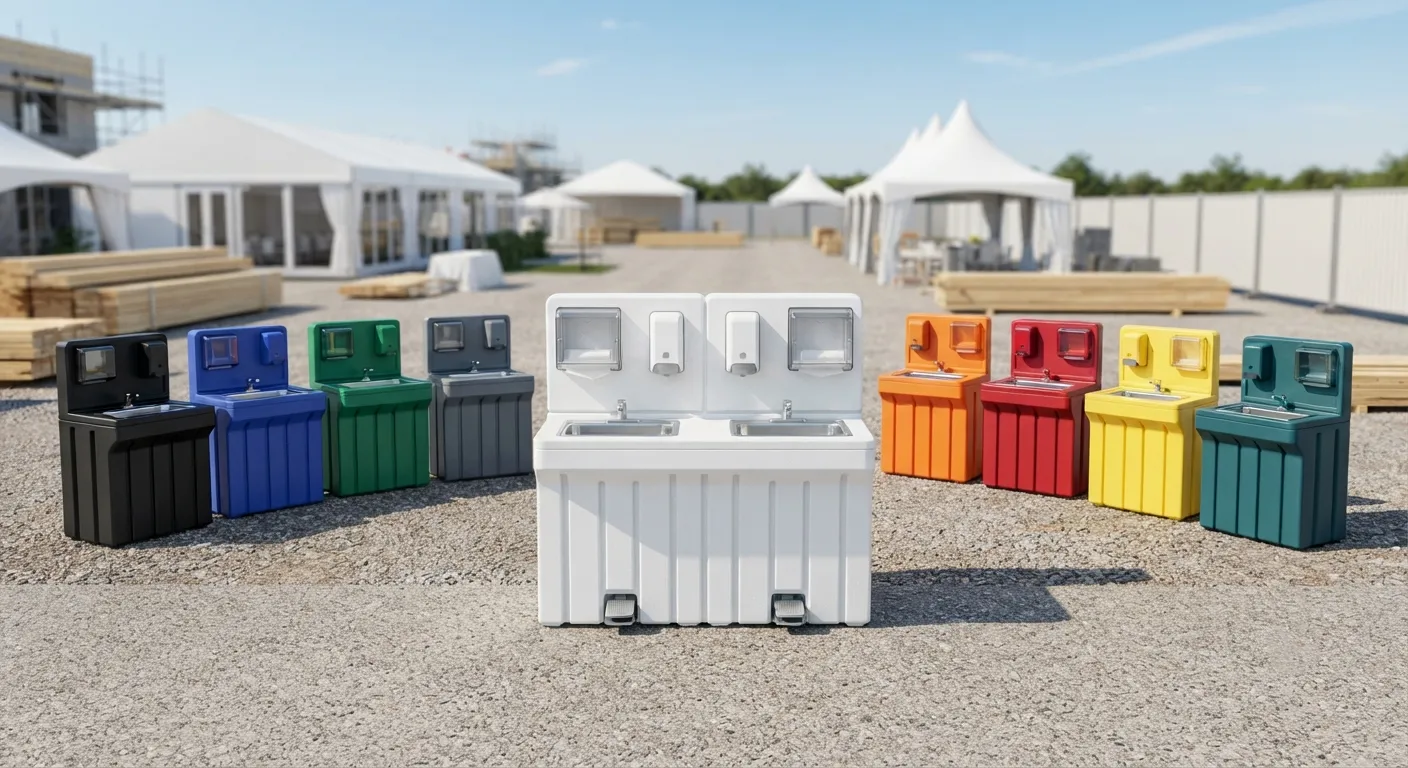
If your event runs lighting or a PA system off a generator, that same layout planning matters for a temporary power pole too. Knowing how to brace a temporary power pole against wind gusts near an open finish-line field keeps cabling and canopies from becoming another tripping hazard next to your restroom cluster. Ground-fault protection on any temporary circuit follows OSHA 1926.404(b)(1)(ii), the same standard we point contractors to on job sites. Pair the power pole and restroom layout early, before the course map gets locked, and route service trucks along your 60-foot straight clearance path the same way you would for roll-off dumpster rental at a construction site. If your race also draws vendor booths, a temporary fence rental or crowd control barrier rental keeps foot traffic organized around the restroom cluster without funneling everyone through one gap. Our porta potty placement guide walks through service access in more detail, and handwashing station rental covers the companion units most races add next to food and water stops, since soap and towels or a hand-drying device are required under 29 CFR 1910.141(d)(2).
How far in advance should we book race restrooms?
Book as soon as your course map and field size are set, ideally 60 to 90 days out for a race over 500 runners. Popular race weekends fill fast, and larger orders need lead time to route delivery trucks across Tempe Junction and any neighboring course legs.
Can we get restrooms serviced mid-race if units fill up fast?
Yes. We can stage a service truck nearby during the event and pump or swap units between waves if your field runs in heats. Tell us your schedule when you book so we can plan the route.
Do we need an ADA unit even for a small local 5K?
Yes, at least one accessible unit per cluster is standard practice, following ADA Standards section 213.2. It is the right call for any registered field, regardless of size, since you cannot know in advance who will need it.
What is the difference between standard units and a restroom trailer for a race?
Standard units cost less and work fine spread along a course. A restroom trailer moves more people faster at a finish line, and includes handwashing built in, which matters for a crowded post-race area. Get a quote with your headcount and we will tell you which fits.
Do you deliver to towns near Tempe Junction for point-to-point courses?
Yes. We regularly service routes stretching toward Guadalupe, 3.5 miles southwest, and can coordinate multi-town courses. Check service areas or contact us with your route map for a placement plan.
Next step
Get a delivery date
Tell us the address, the dates and the headcount. We size the order and confirm the route.