
Last updated
How many porta potties does a county fair need in Tempe Junction?
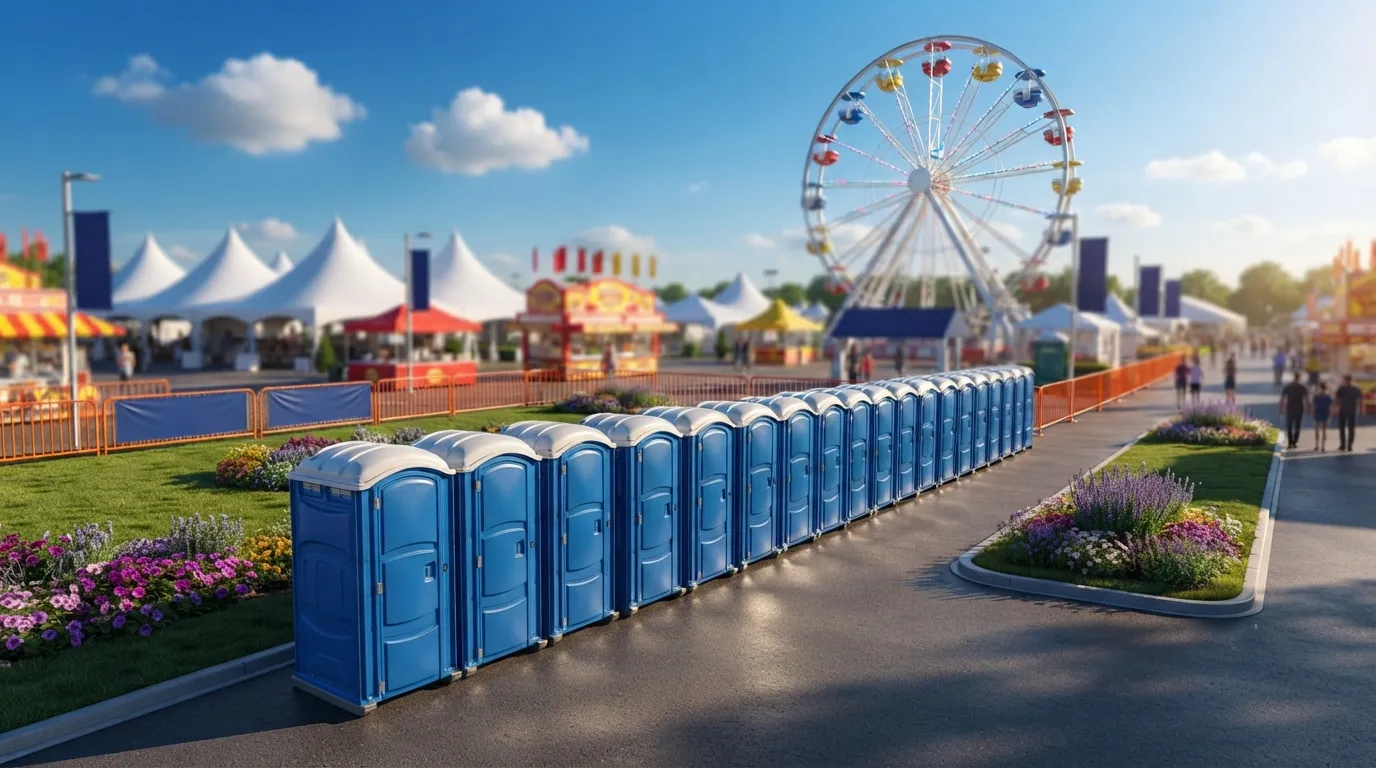
Start with two numbers: workers and expected attendance. Crew and vendor staff fall under OSHA 1926.51(c), which sets 1 toilet facility for 20 workers or fewer, then adds a seat and urinal per 40 workers as headcount climbs, and per 50 once you cross 200. Fairgoers are a separate math problem entirely, driven by gate estimates, hours open, and how much beer and funnel cake is involved. Our standard porta potty rental covers the bulk of general attendance, sized at roughly 44 by 48 inches on the ground and about 92 inches tall, with a 60 to 70 gallon holding tank that handles a full fair day without a mid-afternoon service call. Layer in deluxe flushable porta potty units near VIP areas or beer gardens where people expect something closer to a real restroom. If you are still working out the count, run it through our how many porta potties do I need guide before you call, and check the porta potty placement guide for where units actually need to sit relative to food booths and generators.
Do county fairs in Tempe Junction need ADA accessible units?
Yes. Under ADA Standards section 213.2, when single-user portable toilets are clustered, at least 5 percent of that cluster must be accessible, and never fewer than one unit. A county fair with restroom banks at multiple gates needs an accessible unit at each bank, not just one for the whole fairground. Our ADA accessible porta potty units meet the 36 inch clear route called for in ADA Standards 403.5.1, a 32 inch door opening per section 404.2.3, and the 60 inch turning circle required under section 304.3.1. Approach surfaces need to be stable and slip resistant per section 302.1, which matters on fairground gravel or turf more than it does on a paved lot. Reach ranges follow section 308.2.1, capped at 48 inches high, and door hardware has to work with one hand and no more than 5 pounds of force under section 309.4. If your fair layout includes a ramp anywhere near the restroom bank, keep the slope at 1:12 or flatter per section 405.2. Skip the guesswork and read the full ADA restroom requirements page before the fair board signs off on your site map.
What does county fair restroom rental cost in Tempe Junction?
Fair pricing runs on event-day rates rather than the daily contractor rate, since fairs run multiple days back to back with heavier traffic per unit.
| unit | duration | typical range |
|---|---|---|
| standard | event | $200 to $800 |
| ada | day | $230 typical |
| deluxe | day | $85 to $1200 |
| trailer | event | $2,499 to $3,899 |
A multi-day county fair usually mixes standard units for general grounds traffic with a restroom trailer rental near grandstands or ticketed areas. For a bigger fair with a main stage and a carnival midway, an 8 stall restroom trailer can absorb the peak crowd better than a wall of single units, while a 4 stall restroom trailer fits smaller satellite areas. Delivery fees fall separately in the $100 to $500 range depending on distance and access, and fairgrounds with tight gate clearance should plan for that ahead of time since roll-off dumpster rental trucks and restroom trailers both need a straight shot in. Check full pricing logic on our porta potty rental cost and restroom trailer rental cost pages, and use request a quote once you know your headcount and site layout.
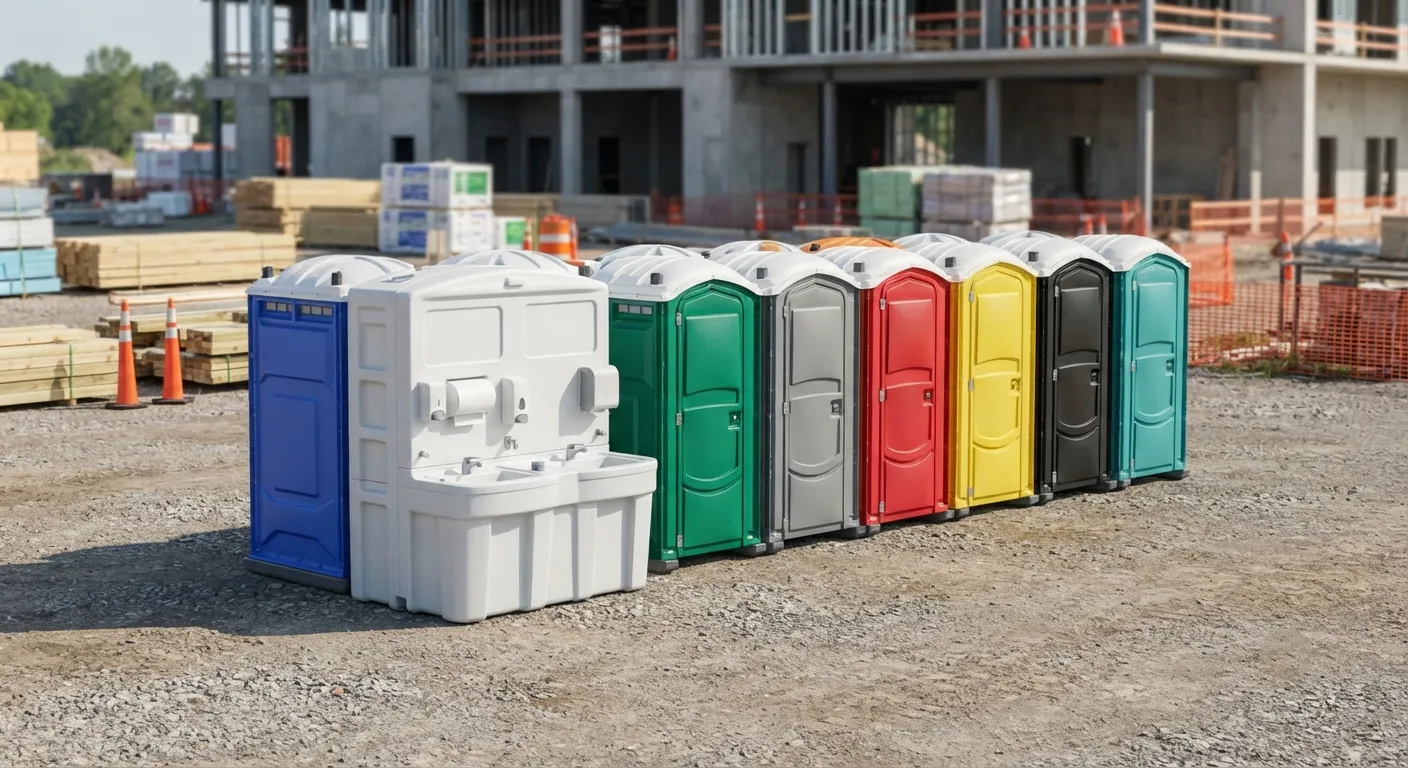
Handwashing matters as much as toilet count at a fair with food vendors. 29 CFR 1910.141(d)(2) requires soap and towels or a hand-drying device, not hand sanitizer alone, at any washing facility you set up. If vendors near Tempe Junction are applying any paints, coatings, or pest treatments to booths or structures before the fair opens, OSHA 1926.51(f)(1) kicks in and requires washing facilities specific to that exposure. Pair a handwashing station rental with each food court cluster and a portable sink rental behind vendor rows. Fairgrounds near Guadalupe, 3.5 miles southwest of Tempe Junction, and Paradise Valley, 15.8 miles north, often draw crews and vendors from both directions, so plan delivery windows around traffic from either side. For crowd flow and vendor lanes, a temporary fence rental or crowd control barrier rental keeps foot traffic away from generator cords and holding tanks, both fire and trip hazards under general fairground housekeeping practice.
How far in advance should I book restrooms for a county fair?
Book as soon as your gate estimate firms up, ideally 60 to 90 days out for multi-day fairs. Restroom trailers and ADA units book first since supply is limited. Waiting until fair week usually means settling for whatever standard units are left, not the mix you actually planned.
Can I rent both porta potties and a restroom trailer for the same fair?
Yes, and most mid-size fairs do exactly that. Standard units handle general grounds traffic near the midway, while a trailer serves grandstand or VIP areas. Mixing unit types by zone controls cost better than trailers everywhere or standard units everywhere.
Do fairgrounds need extra units for food vendor areas?
Yes. Food booths draw concentrated foot traffic and need handwashing stations separate from general toilets. Pair handwashing station rental units with vendor rows and keep at least one ADA unit within that same cluster under ADA Standards 213.2.
What happens if a unit needs servicing mid-fair?
Multi-day fairs should schedule at least one service visit per day given attendance volume, well above the ANSI/PSAI Z4.3 baseline of once weekly for lighter use. Call ahead for emergency service if a unit floods or tips during peak hours.
Does Tempe Junction require a permit for fairground restrooms?
Placement on fairground property usually falls under the venue's own rules, but anything touching a public right of way needs confirming with the city directly. Check our porta potty permit requirements page before finalizing your site map.
Next step
Get a delivery date
Tell us the address, the dates and the headcount. We size the order and confirm the route.